Church of the Broken Heart
June 7, 2011 at 10:25 AM Leave a comment
Church should be a respite from the world. It should be a quiet, peaceful place where one thing happens: worshiping the Lord. Whether it’s congregational singing, listening to a sermon, teaching or attending a Bible class, working in the children’s groups, or something else, all should be done to the glory and honor of God. Why doesn’t that happen in many churches today?
There are two answers:
- Tares exist among wheat, and
- Selfish, immature Christians
The reality for too many churches is that if one of the “tares” isn’t creating a problem, one of the Christians with a big personality is. Any way you look at it, the problem becomes the overriding factor that often defines that particular local body of believers.
I’ve been talking about legalistic churches and there is a good deal to say about them. One of the things that probably most defines a legalistic church is an overriding desire to remain their own group. By that I mean that they look warily on people who were not born and raised in that particular church, or whose children were not home schooled all their lives, as just one example. This pits “insiders” against “outsiders” and can and does create lasting scars.
In the last church we attended, many comments we heard were by those whose children were home-schooled. It was implied that those children were somehow better, more obedient to parents, more loving, etc. Well, you can imagine how that made kids (and parents of those kids) who were not home-schooled feel. The idea that home-schooled children are in some way superior to those who are not home-schooled is an opinion, and quite frankly, from my experience as one who taught in the public schools for over ten years, while many home-schooled kids are often ahead of their public school peers in knowledge, they are often coddled. In short, while their head knowledge may be ahead of their peers, their social skills can be and often are, severely lacking. But this is merely one example of how one group within a church setting can pit itself against another group, creating unscriptural schisms that absolutely should not exist.
Here again though, the pastor and the deacons/elders set the tone. With respect to this
The church I most recently left after roughly four years in attendance and being involved in teaching most Sunday mornings and Wednesday evenings, has a plan. The plan is to relocate the church from their current rural area to a place that is in town. The building has been purchased and it is a matter of raising the necessary funding to retrofit that church. At least one and a half million will be necessary for such a project, which will take some time to raise. They will likely accomplish it though simply by sheer effort.
Knowing what I know about that church and how many people have left over the years (mainly because they never felt as if they were part of the body), I can see some rough times ahead for them. Here’s what I mean by that. They are going to relocate from their rural setting (that they’ve had since the 1950s) and move into a far more populated area. What this means is that many new people will begin attending the church, if for no reason other than the fact that there is a new church in the area and it is now in a neighborhood that will allow people to actually walk to for attendance. I can see the numbers of said church grow exponentially.
However, also knowing how certain individuals in that church treat people who begin attending, I can see that church with a revolving door. People will come, they will start to enjoy it, then they will be on the receiving end of brash comments, and then they will leave. Others will come and the process will repeat itself. This will happen until word gets out that you don’t want to go to that church because people will eat you up and spit you out.
So what that church will end up with is simply a new location made up of essentially the same people that were there in the old location. What will be the result of that, besides the obvious? Well for one thing, the additional money that is needed to pay for the new mortgage will have to come from the same people that have always attended that church. There will be no new – lasting – build to the congregation, making it that much more difficult for the parishioners who have attended for years. This will place tremendous stress on the situation, including the ability to meet the pastor’s salary, which is fairly high for a church that size.
But I mentioned tares. What are tares and how do they work inside the setting of the New Testament church? Easy. It is their job to corrupt the pure teaching of God’s Word and this is done through any number of ways, including, but not limited to the personalities of the individual tare. Let’s explore that for a moment because every church has ’em.
According to Jesus’ teaching in the parable of the wheat and tares, no sooner had the farmer planted good seat for wheat, when an enemy came and sowed seeds of tares in with the wheat. You can read about this in Matthew 13:24-30; 36-43. The problem of course, is that tares tend to look like wheat until both are full-grown when it is far easier to separate the wheat from the tares without doing damage to the wheat.
Please note that in the parable, the farmer did not place sentries around his fields to keep his enemy from planting tares. While not good, tares are there for a purpose. The purpose is to actually create problems, but those problems are allowed by God to strengthen His Body. God could have easily kept the tares from entering any aspect of the Church (and by Church here, I’m referring to the visible Church; the church the world sees, since tares are never part of the invisible or true Church), but He allowed tares to enter for the purpose of teaching us and strengthening us.
In truth, tares cannot directly teach anything but bad things, however, Christians can learn from tares. We can learn what to avoid. We can learn what not to do and how not to act. Having tares in the local body of believers allows authentic Christians to put into practice His Word so that we become victorious over them and God is glorified.
The problem that can and too often does occur is that in many churches, tares wind up setting the tone and authentic Christians often seem powerless to do anything but go along with those tares. The reason for this is twofold:
- They are powerless because they don’t know Scripture
- They are not relying on God for strength to combat the tares
So even in situations where they know from Scripture what to do, they often succumb to a stronger personality because they are not relying on God’s strength to do what they should be doing. If we read through just about any of Paul’s letters (or for that matter, just about any New Testament gospel or epistle), the writer often takes pains to warn his readers that they need to do what Scripture prescribes. This is only done effectively only when a person/leader relies on the strength God provides. Anything else means Christians start acting like tares, doing things in our own strength.
But too many churches fall into the trap of “we’ve got to get along because that means that we truly love one another.” This can be problematic because we sometimes erroneously believe that if there is no outward arguing, we are getting along and therefore loving as God would have us love. The two do not necessarily equate though.
I recall in my last church when the pastor’s wife was told by someone who there were cliques in that church, the wife was very quick to disagree. “No. There are no cliques here,” as if by saying that, it would be true. This is denial because wherever people are gathered, the tendency to have cliques comes into play.
But by denying that cliques exist, then there is no need to root them out and deal with them. Essentially, you cannot deal with something that does not exist, right? In the meantime, there is tension among the body because leadership refuses to see and/or deal with the problem that exists. However, they can kid themselves into thinking that the problems are really non-existent.
As I’ve stated before, all of this really comes back on the leadership. In my last church, what I quickly learned was that many of the individuals who were part of the leadership had little to no biblical training. Sure, they studied the Scriptures on their own, but they were rarely if ever involved in teaching classes (which is what elders for instance are supposed to do). When they prayed publicly, they pretty much recited the same words repeatedly and unfortunately, managed to pray incorrect doctrine without truly realizing it.
So because of this, the leadership of the church is and remains weak by their lack of knowledge and their inability to biblically approach any problems that exist within that body. Again, they mistake “getting along” with actual love. Yet, if we look at the New Testament church in the book of Acts, there were some very interesting things that occurred, which space does not permit us to get into with this blog, but maybe next time.
Loving does not necessarily mean “getting along.” Can you imagine if you, as a parent, only wanted to “get along” with your kids? Say good-bye to parental authority and respect. I guarantee that your kids will quickly learn how to take advantage of you.
Above all things, in every church setting, people should have respect for one another and do all the things that Paul outlines in 1 Corinthians 13; the very things that will build the body of Jesus Christ up. All too often, these are the last things that are done, or they are only done by a few people consistently.
Pastors of legalistic churches consistently mistake love for people who “get along” outwardly. The other extreme as I’ve mentioned previously is a church that has run amok with individual personalities and neither the pastor or the leadership can keep up with the demand to put out the fires.
Consider the fact that every church has tares within it. If this is the case, then how is it possible to truly get along with everyone? A church that is built on the foundation of Jesus is involved in a battle. The battle is to ensure that people and their personalities do not dominate that local body. When a church is “getting along,” more often than not, they only appear to be doing so on the outside, but underneath there is usually great turmoil.
When I left my last church, it was very difficult. We had gone through some very rough situations. Had I listened to the warnings that God was sending my way from His Spirit to mine, I would have left earlier, but I failed. Because I did not listen, I was run over with what felt like a steamroller. I’m not the only one, but this is the way it is in churches where outward appearances are emphasized over other things. It is wrong. It is deceptively wrong and true Christians – especially in this day and age – cannot afford to continue to allow themselves to be carried off down the humanistic river.
Unfortunately, I truly believe this is going to become more of the norm for the average church today. It will be relatively easy for them – due largely to economic woes – to take a humanistic approach to life in church and any problems that will arise from the gathering of many people from all walks of life, rather than simply go to God’s Word to find out what He has prescribed.
This is one of the biggest reasons why I am of the opinion that if the Lord ever called me into some type of pastoral ministry, I doubt that I would be willing to take a salary. I would prefer to be as Paul was; a tentmaker, supporting himself, even though he had a right to receive a salary from the congregation.
Too many pastors today have unbelievable salary packages. These packages often include full benefits. Let’s not forget that pastors do not pay taxes either, which means they take home what they earn. I truly believe that for the average pastor today, the temptation to shove things under the rug and not deal with them effectively and biblically is too great. This is not to say that all pastors have this problem, but I think in smaller churches, it can happen easily.
Once a pastor allows or sets the wrong tone, it is very difficult for that pastor to change that tone and if he has lost the ability to lead, to regain that ability. Imagine being a pastor of a small church, making $70 thousand or more (with everything) and then dealing with the problems of the church. The last thing you want is to see people who tithe leave the church.
Yet, consider that same pastor who is self-supporting in that same situation. Do you think the results would be the same? This is a blog by itself. Maybe one day, we’ll get into the problem of “pastor worship” which seems to affect many churches today. It’s sad, it’s unscriptural, and of course, it is wrong. But that’s another story for another day.
You can listen to Fred on his weekly program “Study-Grow-Know” on AM950 KAHI (www.kahi.com, until June 11th). Starting July 1st, Fred will have his own page on OnePlace.com where his program will continue with new content added weekly. He is also currently on Live365.com.
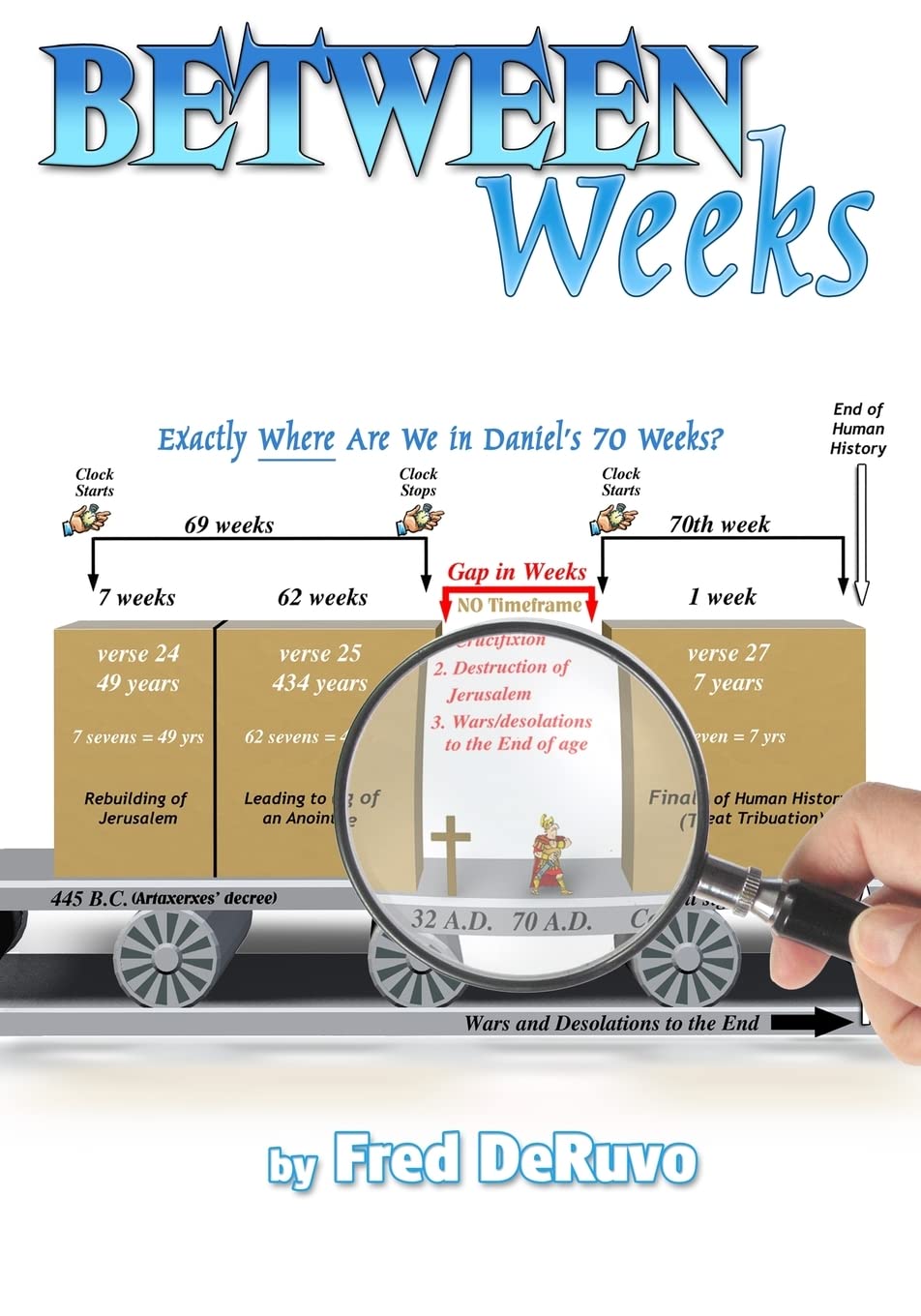
Fred has written over 24 books on a variety of theological and doctrinal subjects. Visit his Web site at: http://www.studygrowknow.com for more information, to purchase his books (which are also available on Amazon.com), or to donate to his tax-deductible ministry.
Entry filed under: 9/11, alienology, Atheism and religion, Communism, Demonic, dispensationalism, Eastern Mysticism, emergent church, Gun Control, Islam, Islamofascism, israel, Judaism, Life in America, new age movement, Posttribulational Rapture, Pretribulational Rapture, Radical Islam, rapture, Religious - Christian - End Times, Religious - Christian - Prophecy, Religious - Christian - Theology, salvation, Satanism, second coming, Sharia Law, Socialism, temple mount, ufology.
 StudyGrowKnow
Trackback this post | Subscribe to the comments via RSS Feed